


When Felix Colon walks the streets of Fitchburg, he isn't looking down or passing by. He is looking directly into the eyes of the city's most vulnerable residents — people sleeping in cars, huddled under bridges, or seeking shelter in hidden encampments along the Nashua River. Where others might see an uncomfortable social statistic, Colon sees his own past reflection.
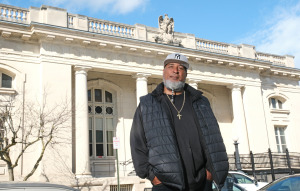
“Everyone has a story that fuels my passion,” said Colon. “I was homeless as a teen.”
Today, the 55-year-old Fitchburg resident is a sophomore at Fitchburg State University, pursuing a Bachelor of Science in Human Services with a minor in psychology. To his classmates, he is a dedicated adult learner working through lectures, assignments, and group discussions. But out on the pavement, he is the founder, director, and sole primary operator of Meek and Humble Ministries — a grassroots outreach effort that prepares and delivers roughly 80 hot meals three times every week to Fitchburg’s unhoused residents, while also operating a shower setup directly at local churches.
His selfless commitment recently earned national recognition. Colon was selected as one of just four resident leaders across the country to receive the prestigious Dorothy Richardson Award for Resident Leadership from NeighborWorks America. Named in honor of the pioneering 1960s Pittsburgh activist who sparked a national movement for neighborhood revitalization, the award recognizes individuals who step forward from within their own communities to build strength and hope from the ground up.
Yet when asked about national honors and public praise, Colon immediately shifts the focus away from himself.
"I am honestly overwhelmed," said Colon of the award. "I give the recognition to Jesus because I follow his example of service. I will keep doing my best to uplift my community."
Colon has made an impact on campus during his visits into the Academic Coaching and Tutoring Center.
“Felix's compassion and strong desire to make a difference in his community is prominent,” said Administrative Assistant Courtney Neforas. “From cooking meals, providing showers for those who need them, and humanizing the unhoused, it is clear that his mission is deeply rooted in compassion, humanity, and humility. As a nontraditional student beginning his journey with us at Fitchburg State University, Felix is a vital addition to our campus community."
To understand how a man who was once ousted from middle school, trapped in active addiction, and entrenched in gang culture became a recognized community leader requires tracing a journey marked by profound struggle, redemption, and an unshakeable sense of purpose.
Colon’s early life was defined by circumstances that offered few safety nets. Growing up surrounded by hardship, he found himself alienated from traditional institutions early on.
"I was thrown out of the public school system in the 7th grade," said Colon.
Without the structure and safety of school, the pull of street culture was swift. Seeking protection, belonging, and identity, Colon drifted into gang involvement. Substance abuse soon followed, trapping him in a destructive cycle that gradually stripped away his stability, his personal relationships, and ultimately, his home.
As an older teenager and young adult, Colon experienced homelessness firsthand — sleeping wherever he could find cover, navigating cold New England nights, and living with the deep emotional weight that accompanies life without a home.
For years, survival was his only metric. But beneath the tough exterior built through years of gang life and street survival, a quiet desire for change was taking root. Colon’s turning point did not arrive as a dramatic, Hollywood-style overnight shift; rather, it was a deliberate, choice-by-choice commitment to stop running from his past and start confronting it head-on.
Colon credits two foundational pillars with saving his life: a profound awakening in his Christian faith and the rigorous personal accountability of a 12-step program. The program required him to look squarely at the damage caused during his active addiction and actively seek ways to make amends — not merely through words, but through dedicated action.
"My transformation comes from my belief in Jesus and the NA 12-step program," said Colon. "I am making amends to society."
For Colon, achieving personal recovery was only the first step. He felt a deep, personal duty to reach back into the very dark places he had escaped and offer a hand to those still trapped there.
"Many seek the purpose of life and meaning," said Colon. "I found mine inside empathy and service."
Colon’s work in street outreach long predates the founding of Meek and Humble Ministries. Years before moving to Fitchburg, he was already putting his principles into practice in other Massachusetts communities.
In 2011, while living in Winchester, Colon recognized that standard social service frameworks often failed to reach young people living on the margins. Traditional shelters and agencies frequently required individuals to come to them during specific operating hours, creating barriers for youth who felt alienated or distrustful of formal systems. In response, Colon designed outreach for a peer-to-peer mobile outreach framework called Journeys of Hope, tailored specifically for youth ages 17 to 25.
Felix's compassion and strong desire to make a difference in his community is prominent. From cooking meals, providing showers for those who need them, and humanizing the unhoused, it is clear that his mission is deeply rooted in compassion, humanity, and humility. As a nontraditional student beginning his journey with us at Fitchburg State University, Felix is a vital addition to our campus community.
When he moved to Fitchburg in 2015, Colon brought that hands-on experience with him. He embedded himself in the local neighborhood, eventually enrolling in the Community Organizing Leadership Academy operated by NewVue Communities — a North Central Massachusetts nonprofit focused on community organizing, housing, and economic development across 22 municipalities.
The true test of Colon’s initiative arrived in the spring of 2020. As the COVID-19 pandemic swept across the region, traditional support systems for the unhoused ground to a halt. Public buildings, libraries, and coffee shops closed their doors, while local shelters were forced to reduce capacity to comply with physical distancing guidelines.
Almost overnight, Fitchburg’s most vulnerable population faced a devastating crisis: no reliable access to hot food, basic hygiene facilities, or human contact.
Colon refused to stand by and watch his neighbors suffer. Utilizing his leadership training from NewVue Communities and his extensive knowledge of street dynamics, he stepped up to fill the void.
"The organization did not have a street outreach model, so I created it," said Colon.
Rather than waiting for emergency funding or institutional approval, Colon began cooking meals in borrowed kitchen spaces and taking them directly to tent sites, park benches, and parked cars across the city. That rapid response effort officially became Meek and Humble Ministries.
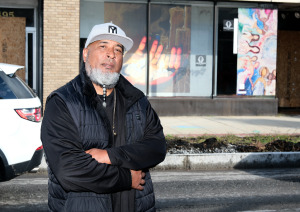
"He goes to where they are, instead of waiting for them to come to him," said Director of Community Organizing at NewVue Communities Francisco Ramos. "Felix has been very clear in his mind and his heart that his mission is to humanize unhoused individuals and families within our society, and he has been committed to that goal for years."
Running a grassroots outreach operation single-handedly demands extraordinary physical, mental, and emotional endurance.
On outreach days, Colon’s routine begins long before the first food container is handed over. Preparing 80 hot, balanced meals three times a week requires consistent kitchen space, food sourcing, and meal prep. Over the years, Colon has cultivated relationships with local community partners who stepped up to share their resources.
Chef Nelson Perez of the former Leominster restaurant El Coqui opened his commercial kitchen to Colon, providing a professional space to prepare large-scale meals. Similarly, Pastor Johnny and the congregation at Highland Baptist Church in Fitchburg provided vital kitchen access and ongoing support.
"El Coqui and Chef Nelson Perez, and Highland Baptist Church in Fitchburg and Pastor Johnny have been strong collaborators," said Colon.
Yet, street outreach demands constant adaptation. As Colon spent more time in the field, he noticed that while food addressed immediate hunger, the lack of access to clean water and sanitation was severely eroding the dignity and self-worth of unhoused individuals. Recognizing this critical gap, Colon expanded his outreach to include mobile shower facilities, providing towels, soap, and hot water directly to encampments.
Taking on mobile showers meant restructuring his daily schedule.
"I pivot," said Colon. "I do more than give out food. I am providing showers now, so cooking has shifted. I’m boots-on-the-ground mostly by myself."
On any given day, Colon can be found navigating Fitchburg’s backstreets. He greets everyone with warmth, offering a hot meal, a shower, and genuine conversation. His approach is rooted entirely in unconditional love and empathy.
"People are often discarded and feel unworthy of love," said Colon. "Seeking them out shows efforts of love, compassion, and creative action."
Colon does this all with another eye on earning a bachelor’s degree from Fitchburg State University.
Deciding to enroll in higher education in his 50s — more than four decades after leaving the school system in the seventh grade — was a monumental leap. But for Colon, returning to school was never about earning a degree for status or personal ambition. It was about setting a visible example for his family and gaining structural tools to expand his community work.
"For the power of example," said Colon when asked what drove him back to the classroom. "I want to be an example for my children and grandchildren that it's never too late for education."
At Fitchburg State, Colon chose to major in Human Services with a minor in psychology. The academic coursework provides him with formal insights into trauma-informed care, human development, family dynamics, and social welfare systems. Colon has been working in human services for over 26 years. He is also a licensed substance use clinician.
In classroom settings, Colon brings a level of real-world perspective that cannot be replicated in textbooks. When professors discuss systemic poverty, addiction recovery, or community health disparities, Colon speaks from direct, lived experience on both sides of the social safety net.
In turn, his studies directly enrich his field work. Understanding psychology allows him to better navigate mental health crises on the street with de-escalation and emotional intelligence, while his human services coursework gives him a broader framework for organizational planning.
Colon’s national recognition through the Dorothy Richardson Award for Resident Leadership places him alongside a rich legacy of community-led activism.
The award is administered by NeighborWorks America, a Congressionally chartered national organization that supports a network of nearly 250 local nonprofits across all 50 states, Puerto Rico, and Native lands. The award’s namesake, Dorothy Richardson, was a pioneering African American activist in Pittsburgh during the 1960s who brought neighbors, financial institutions, and city leaders together to rehabilitate homes and save her community from disinvestment.
For Colon, standing in that tradition is both deeply humbling and a call to push even harder.
"I have big shoes to fill," said Colon. "I will keep doing my best to uplift my community."
Like Richardson, Colon models an approach to leadership that doesn't wait for permission or top-down solutions. He views community health not as something delivered by distant institutions, but as something built person-by-person, block-by-block, on the ground.
As Colon balances his academic load at Fitchburg State with the daily demands of Meek and Humble Ministries, his long-term goals for the organization continue to grow. While his mobile outfit effectively reaches people in hidden spots, operating out of personal vehicles and borrowed spaces inherently limits how many lives he can transform.
His ultimate vision is to establish a permanent physical building for Meek and Humble Ministries in Fitchburg — a dedicated community center where unhoused individuals can access hot meals, warm showers, clothing, case management, and spiritual support under one roof every single day.
"I need donations and a building, or a space to be more effective," said Colon.
For community members who see the growing challenges of homelessness and hunger in their own cities and feel overwhelmed by the scale of the problem, Colon offers a simple, direct remedy for hesitation:
"Stand up, go out and make a decision to help," said Colon. "Decisions imply action and can feed one person."