
Women of Fitchburg Normal School Class of 1898 Display

The Women of Fitchburg State Normal School: Excerpts from the Class of 1898 Theses
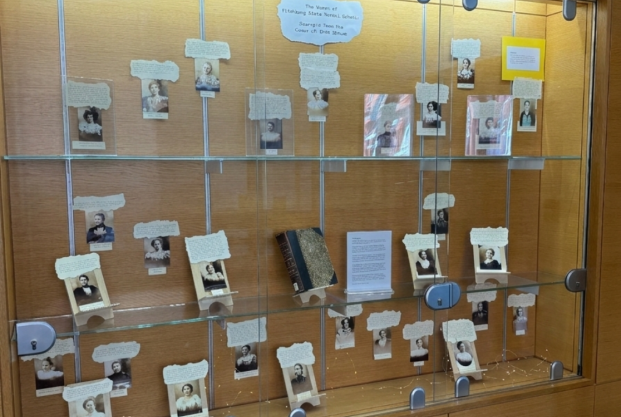
To celebrate Women’s History Month, the Library and University Archives have curated an exhibit featuring excerpts from the theses of early graduates from the State Normal School at Fitchburg.
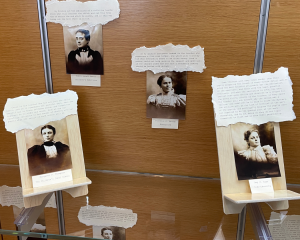
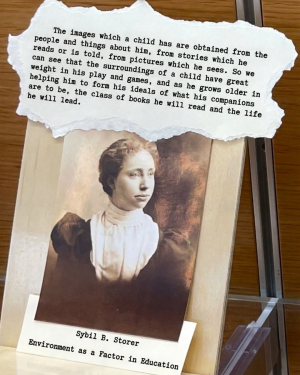
The vast majority of the early graduates of Fitchburg Normal School were women, including all but one graduate from 1898. At this early stage, every student attended the school in order to learn how to become a teacher. You will find that reflected in these theses, where students discuss wide-ranging topics related to teaching and learning, the education system, and teaching philosophies.
Of note is that many of the ideas discussed by these students in 1898 are similar to ideas which are still discussed in the field of education today, or echo through current teacher education programs. Some students’ ideas had early currents of theories or reforms which would not come into fruition for decades to come. While writing over 125 years ago, these exceptional students laid the groundwork for the education that we are still doing.
While we are happy to celebrate the legacy of these students, it is also important to
recognize that the history they represent is not representative of all of the women at our University. These women, like the majority of our past students, are all white, and all discuss very traditional views of gender and femininity. Our exhibit would be incomplete without noting that, missing from this exhibit, are the women of color, trans women, and gender nonconforming people who have also contributed their tremendous work to the field of education.
As a final note, this exhibit contains language consistent with educational standards at the time that the student work was written. It is included with the understanding that much of that language is no longer used or considered to be appropriate within the field of education. This language is included to create an accurate representation of history, and an accurate portrayal of the evolution of a field of study, and of a society.
This exhibit was curated by Olivia Rossetti.