


At Fitchburg State University, far from the halls of the Pentagon or the headquarters of the United States Department of State, two professors have spent hours engaged in a task that determines the trajectory of American diplomacy.
Special Assistant to the President and Adjunct Professor Josh Spero of the Economics, History and Political Science Department and Associate Professor Karen DeAngelis of the Education Department recently concluded their service on the National Screening Committee (NSC) for the Fulbright U.S. Student Program. Their mission: to sift through dozens of applications for the 2026–2027 award cycle and identify the "gold nugget" candidates who will represent the United States in some of the over 160 countries where Fulbright scholars journey.
The Fulbright Program is the U.S. government’s flagship international academic exchange. Since its founding in 1946, it has been driven by a singular, ambitious goal: to foster peaceful relations through mutual understanding. For Spero and DeAngelis, serving on the committee is more than just academic service—it is a high-stakes responsibility that bridges the gap between Fitchburg and the global stage.
"The work of Dr. Spero and Dr. DeAngelis exemplifies the profound impact that Fitchburg State faculty have far beyond our campus borders," said President Donna Hodge. "By lending their expertise to the Fulbright National Screening Committee, they are not only representing our university on a global stage but are actively shaping the future of international diplomacy. Their dedication to identifying and mentoring the next generation of global scholars reflects our core mission: to be a university that is locally anchored and nationally recognized, yet deeply engaged with the world. We are incredibly proud of their service and the way they continue to open doors for students to lead, learn, and promote peace through mutual understanding."
Serving on the NSC is a voluntary commitment that requires hundreds of hours of reading, rating, and debating. The committee functions as the penultimate filter, determining which young scholars, researchers, and English Teaching Assistants (ETAs) will move forward to the final selection round.
"It is such an honor and very humbling to serve, on behalf of Fitchburg State University, in such a significant and transformative screening process," said Spero. "The applications we review provide such a great window onto the world of keen research and high scholarship."
However, that window often reveals an agonizingly high level of competition. For every student selected, many more—often equally brilliant—must be declined.
"One of the most challenging aspects of the review process is having to decline exceptionally qualified applicants," said DeAngelis. "I am always mindful of the time and energy that each applicant puts into the completion of an application and, accordingly, I approach the review process with great care and respect."
Spero echoes this sentiment, noting the intensity of the deliberations.
"Our committee selections weigh heavily on us over the weeks after we’ve received and then review the applications," said Spero. "There are often serious debates among and between committee members, but always remaining respectful and hopeful."
The work of Dr. Spero and Dr. DeAngelis exemplifies the profound impact that Fitchburg State faculty have far beyond our campus borders. By lending their expertise to the Fulbright National Screening Committee, they are not only representing our university on a global stage but are actively shaping the future of international diplomacy. Their dedication to identifying and mentoring the next generation of global scholars reflects our core mission: to be a university that is locally anchored and nationally recognized, yet deeply engaged with the world. We are incredibly proud of their service and the way they continue to open doors for students to lead, learn, and promote peace through mutual understanding.
What keeps these professors coming back to the screening committee year after year is the "spark"—that moment when any number of applications transcend words on a page and reveal a person who might genuinely alter the course of history.
Spero describes these as "gold nugget" applications.
"Every applicant provides our committee with outstanding experiences, but certain stellar proposals simply jump off the page," said Spero. "It’s almost instinctive to grasp that 'this one' proposal particularly will really transform society. It's frequently quite breathtaking to read about how such a research project envisions making a difference in people's lives."
For DeAngelis, the applications serve as a source of personal inspiration.
"Reviewing the applications and learning about the contributions of others to their local communities leaves me hopeful for the future," said DeAngelis. "There is a deep commitment of service to others at the local, national, and international level that is reflected in the submitted applications."
One might assume that world-renowned scholarship is the exclusive domain of "Big Ten" universities or Ivy League institutions. Spero and DeAngelis, however, prove that Fitchburg State is a powerhouse of global perspective.
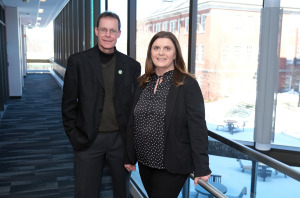
DeAngelis brings a unique toolkit to the selection table. While serving as a faculty member at Fitchburg State University, DeAngelis seeks out opportunities for students to develop a global perspective. In addition to leading a study abroad program, DeAngelis developed an international virtual exchange for students through the Pathways Institute for Negotiation Education Game Changers Program, which is supported by the Stevens Initiative. Once students complete the program, they become members of the U.S. Department of State Exchange Alumni Network.
Through the development and implementation of global learning experiences for students, DeAngelis has further developed an appreciation for the benefits and intricacies associated with global exchange programs.
"It is both an honor and a privilege to represent Fitchburg State University as a reviewer," said DeAngelis. "My experience with global exchange programs enables me to thoughtfully evaluate applications while appreciating the transformative opportunities that international learning experiences offer.”
Spero, whose career spans over 36 years of public service during the 1980s and 1990s in the Department of Defense (the Pentagon), where he worked as a strategist in supporting policymakers toward bringing together former Cold War enemies to cooperate and, eventually become allies, through such efforts as NATO’s Partnership for Peace process.
In academia for much of the past quarter century, Spero’s worked in teams across Fitchburg State’s community to expand or initiate student and faculty exchange programs with partnership universities in Germany and Poland, to raise the university's visibility nationally and internationally.
"Fitchburg State shines in so many ways and with such greatly talented, top-notch, and vastly experienced leading scholars," said Spero. "To contribute meaningfully, it makes our community even better, pushing ourselves to those next levels of opportunity to share with our Fitchburg State community, especially when we contribute with the university’s encouragement in such ways as selecting Fulbright scholars."
When intently considering these Fulbright applications, Spero believes that Fitchburg State students need to envision themselves becoming Fulbright scholars, too. He sees in his students the importance of “serving communities larger than themselves, especially through public service,” as he encouraged them to do so in internships like The Washington Center’s Program and even overseas.
Serving overseas and understanding better how Americans might peacefully affect other parts of the world, particularly when international conflicts afflict so many countries, remains crucial for Spero, fundamentally for realizing the impact the young generations can and must make.
By trying to go abroad during one’s undergraduate years sets the stage, Spero underscores for how they might then compete for such prestigious scholarships as Fulbright as they near graduation and often focus on graduate school.
The Fulbright Program is built on the belief that being "on the ground" in another culture is the only way to truly understand it. This philosophy is something both professors have experienced firsthand.
Spero, who has taken dozens of Fitchburg State students to Europe (six times since 2015), finds that reviewing Fulbright applications reinforces his passion for encouraging and providing Fitchburg State opportunities like study abroad scholarships and campus-to-campus partnership building creates an incredible impact both on our University’s U.S. students going abroad and our international students studying with us on-campus.
"In reviewing these incisive Fulbright applications, I then imagine how transformative these students and graduates will experience during their time in the places I know well," said Spero, “and I hope Fitchburg State students increasingly take up that international scholarship’s call.
"It drives me to want to broaden as many minds internationally as possible by taking our Fitchburg State students abroad to immerse themselves in other cultures, histories, and societies, like longer-term Fulbright scholars have done for decades,” said Spero.
Then, Spero witnesses consistently, “for our students to return overseas, even to expand their career’s horizons abroad, as some have, helps them become internationally prepared ambassadors for our university – and beyond.”
For DeAngelis, the review process itself is a form of education.
"I often found myself exploring the cultural traditions, language, and customs of the countries that I was assigned to review," said DeAngelis. "Serving as a reviewer expanded my own global awareness and sparked a desire to learn more about other places."
As the 2026–2027 selection cycle concludes, both Spero and DeAngelis are looking toward how they can bring the Fulbright spirit back to the Fitchburg State campus more permanently.
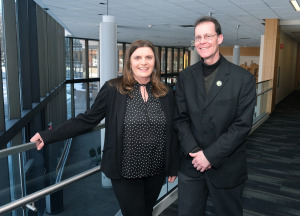
Spero is particularly vocal about reviving the university’s Fulbright nomination committee process.
"I really hope that Fitchburg State brings the Fulbright experience to our campus,” said Spero. “I picture the International Education Office as a great mobilizing team to attract those eminently qualified Fitchburg State faculty, librarians, staff, and administration to become representatives for such a committee."
DeAngelis would also like to see more student and alumni involvement with the program.
“Fitchburg State University is strongly committed to academic excellence while preparing students for success in a global society,” said DeAngelis. “These values mirror those in the mission of the Fulbright U.S. Scholars Program. Given that the qualities I seek in a Fulbright Fellow are reflected in our students and alumni, it is my hope that more members of our community will apply to the program.”
The goal is clear: to ensure that the next time a "gold nugget" application reaches the National Screening Committee, it bears the name of a Fitchburg State student.
This voluntary service is a significant factor in the long-term sustainability of the program.
By lending their expertise to the U.S. Department of State in the Fulbright screening process, Spero and DeAngelis are not just assessing and rating prospective Fulbright portfolios—they are helping to select the next generation of global ambassadors who will, in the words of the Fulbright mission, "promote mutual understanding between the United States and other nations."
As the final selections for the 2026–2027 cycle move forward, the work of Spero and DeAngelis serves as a vital reminder that global leadership often begins with local mentorship.
By dedicating their time to the National Screening Committee, they have not only secured the future of the Fulbright legacy, but have also firmly placed Fitchburg State at the center of international diplomacy.
Their efforts ensure that the worthy candidates chosen today will become the bridge-builders of tomorrow, fostering a world defined by mutual understanding rather than isolation.
At Fitchburg State, the mission of the Fulbright Program lives on, proving that when dedicated educators lend their expertise to the global stage, they do more than evaluate potential—they help realize a more peaceful and connected future for everyone.